
Endress+Hauser, Streamline Process Management
Gas Recovery Measurement: Are You Getting the Results You Expected?
A gas recovery or substitution project can look good on paper.
The expected recovery is calculated. The economics work. The equipment goes into service.
Then comes the harder question:
Are you actually getting the substitution rates you expected?
It’s a question our sales team has been hearing more often. Another version is just as important:
How do you verify that scrubbing is doing what you expect on natural gas or well gas?
If you can’t confidently answer either question, the problem may not be the recovery system itself.
It may be that you don’t have enough information about what is happening in the gas stream.
Expected performance and actual performance aren’t always the same thing
Gas applications don’t operate under perfectly fixed conditions.
Flow changes. Pressure and temperature change. Gas properties and composition can change. Moisture or condensate may also be present.
That matters when you’re trying to determine whether a gas recovery, substitution or treatment process is delivering the result you expected.
A calculated or assumed result may have been perfectly reasonable when the project was designed. But if you need to verify actual performance, you need actual process information.
That starts with a fairly basic question:
What are you trying to prove?
For example:
- How much gas are we actually recovering?
- Are substitution rates where we expected them to be?
- Is gas flow changing as operating conditions change?
- Are wet gas conditions affecting the measurement?
- Do we need corrected volume rather than actual volume?
- Is flow enough to answer the question, or do we also need to understand gas composition?
Those are different questions. They may require different information.
Start with the flow measurement
For natural gas and well gas applications, reliable flow measurement gives you a starting point for comparing expected performance with what is actually happening.
This is where the Endress+Hauser Proline Prosonic Flow G 300 can fit.
The G300 is an ultrasonic flowmeter designed for natural and process gas measurement, including applications where gas properties and composition fluctuate. It can be used with dry, humid or wet gas and is designed so the measuring principle itself is unaffected by gas composition.
For drilling, well service, cementing and gas production operations, that opens up some useful applications:
- Wellhead gas measurement
- Separator gas outlets
- Gas recovery systems
- Vapour recovery units
- Gas treatment processes
- Raw and processed natural gas measurement
- Wet gas measurement
The important point isn’t that the G300 measures gas.
There are plenty of ways to measure gas.
The useful part is the amount of process information that can be brought together when the application requires more than a basic flow value
See how the Prosonic Flow G300 works
A quick look at ultrasonic gas measurement and where the G300 fits.
Actual flow may not be the number you need
This is where gas measurement gets more interesting.
Depending on how the G300 is configured, pressure and temperature can be measured along with flow and sound velocity.
Why does that matter?
Because actual volume alone may not tell you enough to compare performance when process conditions are changing.
Pressure and temperature information can be used to determine corrected volume flow. Depending on the configuration and gas-analysis package, the G300 can also calculate additional variables such as:
- Mass flow
- Energy flow
- Calorific value
- Wobbe index
- Molar mass
- Density and viscosity
That gives an operator or engineer more context when the question isn’t simply, “Is gas flowing?”
The question may be:
Are we getting the usable gas or energy value we expected from this process?
Wet gas deserves some attention
Wet gas can make measurement more difficult.
That’s particularly relevant around wellheads, separator gas outlets, raw natural gas and other applications where conditions aren’t always clean and dry.
The G300 uses a condensate-insensitive sensor design. Endress+Hauser designed the sensor to dissipate condensate rather than allowing droplets to remain around the ultrasonic transducers.
That doesn’t mean every wet gas application is automatically a G300 application.
It does mean wet or changing gas conditions aren’t, by themselves, a reason to rule out ultrasonic measurement.
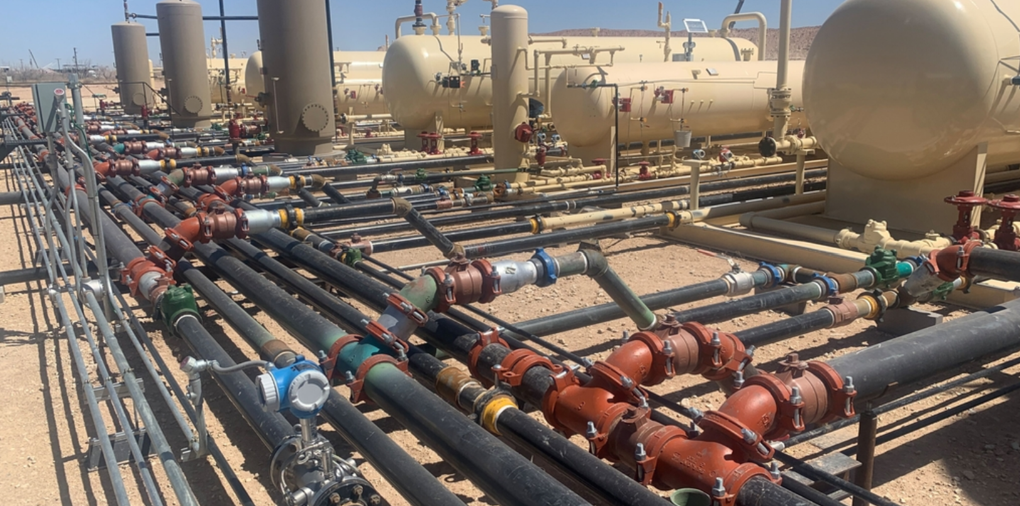
Gas measurement in the field: Changing process conditions can make it difficult to know what’s really happening in the gas stream. In this Permian Basin application, Prosonic Flow G was used to improve gas measurement and process visibility on a three-phase separator. Endress+Hauser Permian Basil Case Study. Image: Endress+Hauser
Application conditions still matter. Gas composition, pressure, temperature, expected flow range, pipe size and the amount of liquid present should all be reviewed when selecting the measurement approach.
Flow tells you part of the story. What if you need composition?
This distinction is important.
Many gas measurement questions start with flow. They often end with composition.
The G300 can provide considerably more process information than a simple volumetric flow measurement, particularly when configured with Advanced Gas Analysis.
But it isn’t a replacement for a dedicated gas analyzer when the application requires direct measurement of gas composition.
If the question you’re trying to answer is:
How much gas is moving through the process?
Start with flow.
If the question becomes:
What’s actually in that gas?
That’s where gas analysis may also be needed.
That difference can matter when you’re investigating substitution rates, process performance or why actual results aren’t matching the original assumptions.
Looking at the G300?
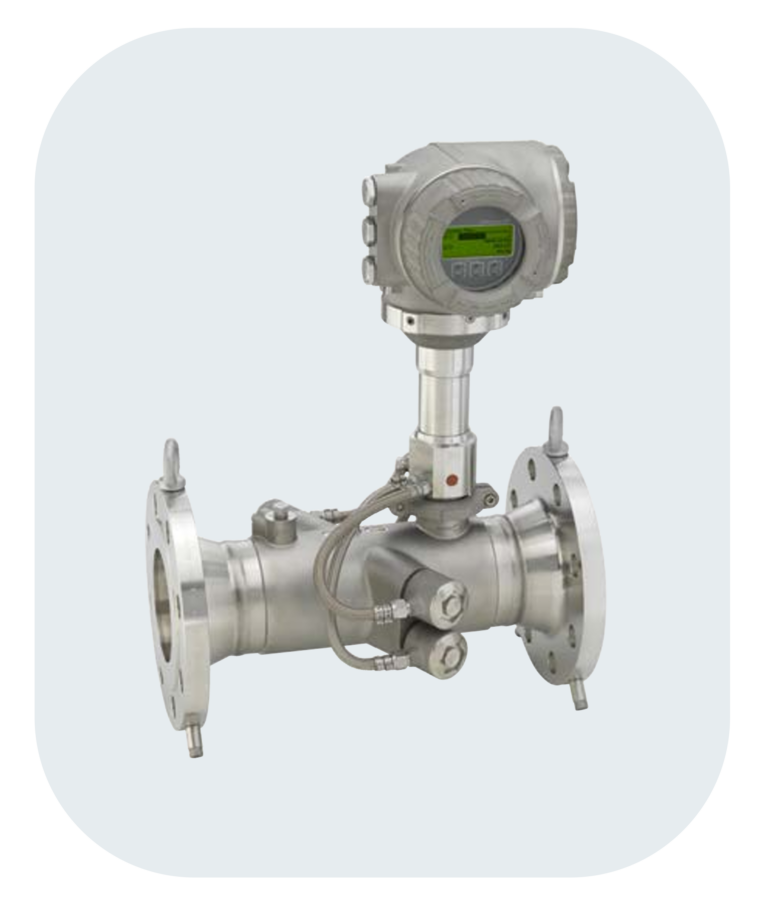
Technical Information →
G300 Product/Competence Guide →
Drawings 2D(pdf) 3D(.stp) →
Review the technical details for your application.
Don’t start with the meter. Start with what you’re trying to verify.
It’s tempting to approach a measurement problem by asking which instrument to install.
We’d start one step earlier.
If you’re not getting the substitution rate you expected—or you’re having difficulty verifying the performance of a gas recovery or scrubbing process—write down the result you need to prove.
Then look at what information you have today.
Do you know actual gas flow?
Do you need corrected flow?
Are pressure and temperature accounted for?
Are you dealing with wet gas?
Could changing gas properties be affecting what you’re seeing?
Do you need composition information to explain the result?
Once those questions are answered, choosing the measurement technology becomes a lot easier.
And sometimes you discover that the missing piece wasn’t another instrument. It was knowing which variable you needed in the first place.
Working with gas measurement in Alberta?
Streamline Process Management works with drilling contractors, well service companies, cementing operations and gas producers in Alberta on Endress+Hauser measurement applications.
Not sure what to measure?
If you’re trying to verify gas recovery, substitution rates, scrubber performance or another natural gas/well gas application, tell us what you’re trying to measure—and, more importantly, what you’re trying to prove.
We’ll help you work through the application.
discuss your application