

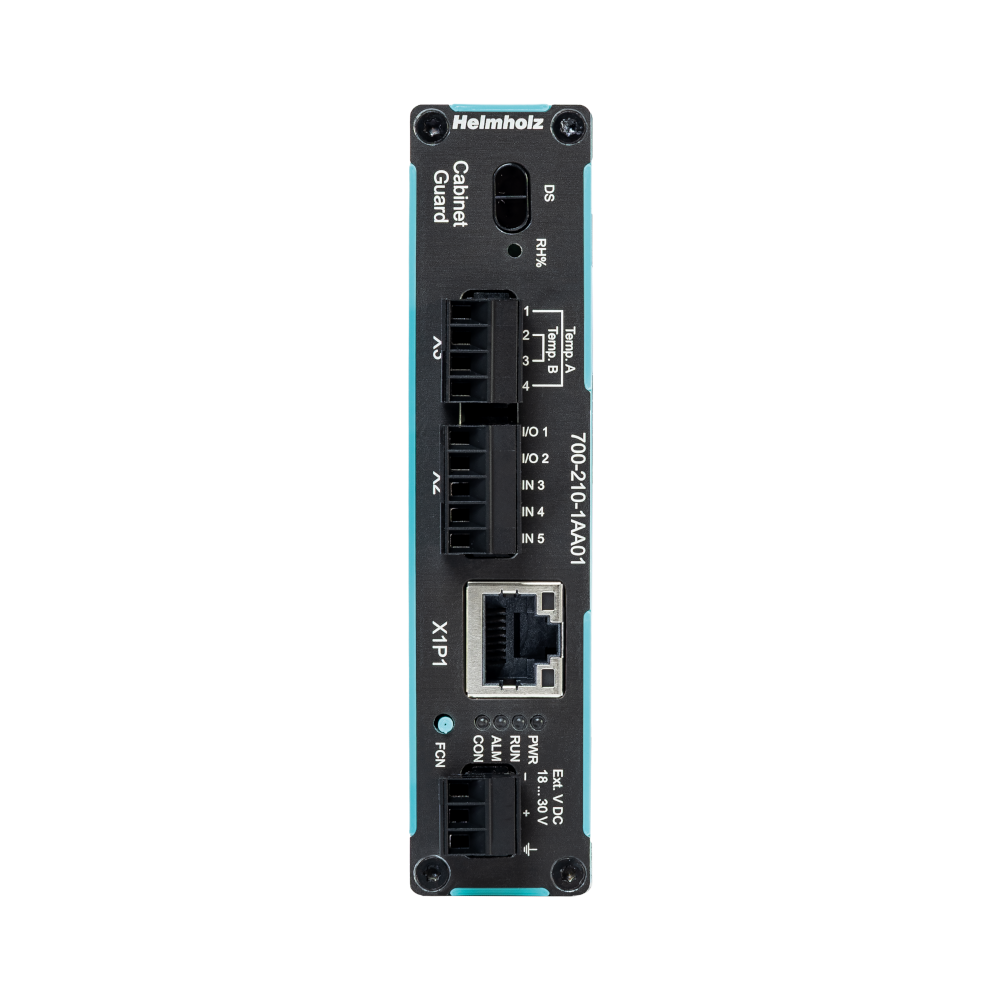
Cabinet Guard Control Cabinet Monitoring System

$US 525.67
Know what’s happening inside your control cabinet. Cabinet Guard monitors temperature, humidity, vibration, power conditions and cabinet access to help identify issues before they become troubleshooting problems.

Control Cabinet Monitoring – Cabinet Guard
For the control without complexity
Cabinet Guard is designed specifically for control cabinet monitoring in industrial automation, utilities, water and wastewater, for oil & gas applications.
Control cabinets often contain the most critical components in an automation system:
- PLCs
- Power supplies
- Network equipment
- I/O systems
- Drives and control hardware
Yet many cabinets operate for years without anyone knowing what conditions look like inside.
Cabinet Guard helps you monitor cabinet conditions, identify changes early, and investigate issues before they become troubleshooting problems.
What is Cabinet?
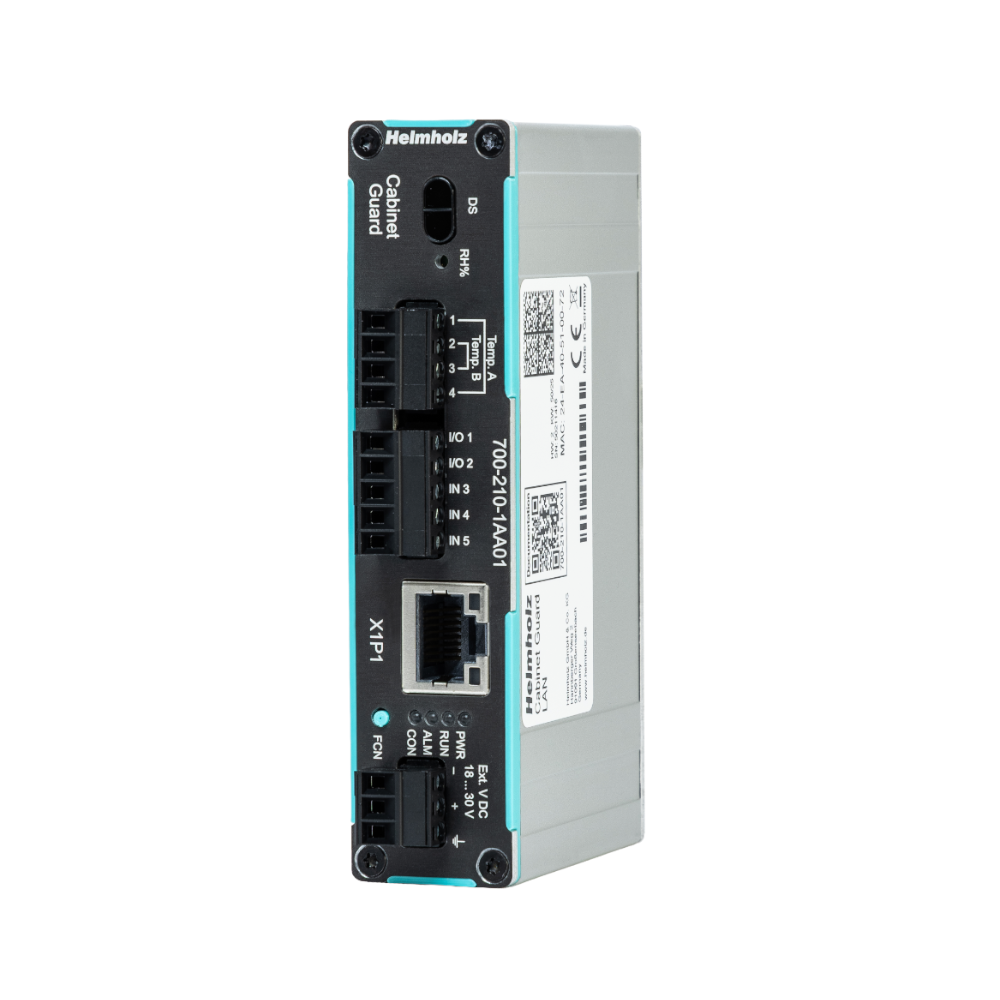
Cabinet Guard is a compact DIN rail-mounted monitoring device designed specifically for control cabinets and electrical enclosures.
It continuously monitors:
- Temperature
- Humidity
- Air Pressure
- Cabinet Door Access
- Vibration
- Shock Events
- Power Supply Voltage

Integrated sensors continuously monitor environmental conditions, cabinet access, and power status — enabling early warning before failures occur.
Measured values can be viewed locally through the built-in web interface, logged for historical analysis, or communicated to higher-level systems using MQTT or Modbus TCP.
Where Does Cabinet Guard Make Sense?
Cabinet Guard is designed for organizations that want better visibility into what is happening inside their control cabinets and electrical enclosures.
It is commonly used for:
- PLC and automation panels
- VFD and motor control cabinets
- SCADA and telemetry cabinets
- Industrial communications cabinets
- Water and wastewater control panels
- Oil and gas control systems
- Utility and infrastructure cabinets
- Remote or unattended installations
You may want to consider Cabinet Guard if:
- Cabinet temperatures seem to fluctuate throughout the year
- Cooling fans, filters, or air conditioners are difficult to monitor
- The cabinet is located in a remote or unmanned area
- You need to know when cabinet doors are opened
- Vibration, impacts, or movement could affect equipment reliability
- You want historical data to help troubleshoot recurring problems
- You suspect environmental conditions may be contributing to equipment issues
When A Simpler Solution May Be Enough
Cabinet Guard may not be the right solution if:
- You only need a local temperature display
- Cabinet conditions are already being continuously monitored
- The cabinet contains no critical equipment
- Downtime would have little operational impact
- You only need a basic temperature or humidity sensor
- You’re looking for a PLC-mounted environmental sensor rather than a standalone monitoring device
Not sure where your application fits?
Common Control Panel Problems
Cabinet Temperatures Keep Climbing
High temperatures are often caused by:
- Failed cooling fans
- Blocked filters
- Air conditioner issues
- Increased equipment loading
- Seasonal temperature changes
Without monitoring, cabinet temperatures can continue rising until equipment begins to fault or fail.
Cabinet Guard helps you monitor temperature trends and receive alarms when limits are exceeded.
I’m Concerned About Condensation or Humidity
Humidity inside a cabinet can contribute to:
- Corrosion
- Electrical faults
- Sensor issues
- Reduced equipment life
Cabinet Guard continuously monitors humidity levels and can alert users when conditions move outside acceptable limits.
I Need To Know When A Cabinet Is Opened
Cabinet Guard uses an integrated distance sensor to monitor cabinet door position.
If the door is opened unexpectedly, an alarm can be generated.
Additional door contacts can also be connected for larger cabinets or multi-door applications.
I Have Remote Or Unattended Cabinets
Many control cabinets are located:
- Outdoors
- In remote facilities
- At pump stations
- In compressor stations
- In utility installations
Cabinet Guard helps provide visibility into cabinet conditions without requiring someone to physically inspect the enclosure.
I Want To Track Vibration Or Physical Impacts
Cabinet Guard monitors:
- Vibration
- Shock
- Movement
This can be useful for:
- Mobile equipment
- Portable systems
- Cabinets exposed to vibration
- Equipment transported between locations
The device can also help identify unexpected impacts or movement events.
Typical Applications
PLC And Automation Panels
Monitor environmental conditions affecting control equipment.
VFD Cabinets
Track temperatures and identify cooling-related problems before drives begin faulting.
Industrial Communications Cabinets
Monitor conditions affecting network switches, gateways, and communications equipment.
Water And Wastewater Facilities
Monitor remote panels, lift stations, and treatment systems.
Oil And Gas Facilities
Monitor analyzer shelters, control cabinets, and remote equipment installations.
Utilities And Infrastructure
Monitor substations, communications cabinets, and critical infrastructure.
Where this fits in real plants
-
Aging cabinets with no environmental monitoring
-
Retrofit projects where space is limited
-
Plants starting predictive maintenance but not ready for full IIoT
-
Maintenance teams tired of “mystery failures”
What Does Cabinet Guard Monitor?
Environmental Conditions
- Internal temperature
- External temperature (optional sensors)
- Humidity
- Air pressure
Cabinet Access
- Door position
- Door opening events
- Additional digital inputs for external door switches
Mechanical Conditions
- Vibration
- Shock
- Movement
Electrical Conditions
- Power supply voltage
Data Collection And Communication
- Web interface
- MQTT
- Modbus TCP
- Alarm outputs
- MicroSD data logging
Why Monitor The Cabinet?
Most monitoring systems focus on equipment outside the cabinet:
- Motors
- Pumps
- Instruments
- Sensors
But many problems begin inside the enclosure.
Examples include:
- Failed cooling fans
- Blocked ventilation
- Rising temperatures
- Condensation
- Unauthorized access
- Power supply issues
Cabinet Guard provides visibility into these conditions and helps identify changes before they become larger maintenance issues.
Learn More About Control Cabinet Monitoring
Why Monitoring Your Control Cabinet Matters Than You Think
Learn about:
- Common cabinet failure modes
- Temperature-related issues
- Humidity and condensation risks
- Cabinet access monitoring
- Remote monitoring strategies
Cabinet Guard Webinar

Watch the Helmholz webinar to see:
- Product overview
- Typical applications
- Monitoring capabilities
- Configuration examples
User Manual
Review installation, configuration, communication options, and technical specifications.
Cabinet Guard User Manual Technical SpecsFrequently Asked Questions
Does Cabinet Guard require a PLC?
No. Cabinet Guard operates independently and includes its own web interface.
Can Cabinet Guard send alarms to another system?
Yes. Alarm and measurement data can be communicated using MQTT, Modbus TCP, and digital outputs.
Can I monitor more than temperature?
Yes. Cabinet Guard also monitors humidity, air pressure, vibration, shock, movement, power supply voltage, and cabinet access.
Can I log historical data?
Yes. Measurements can be stored on a MicroSD card for long-term trending and analysis.
Can I use Cabinet Guard in remote installations?
Yes. Cabinet Guard is well suited for remote and unattended cabinets where environmental conditions are difficult to monitor manually.
Can I connect additional sensors?
Yes. External temperature sensors and additional digital inputs can be connected when needed.
Integrates into existing systems in minutes — not weeks
Cabinet Guard is designed for new installations and retrofit applications.
Data is available via built-in web server, MQTT, or Modbus TCP—no redesign required.
Need Help Deciding If Cabinet Guard Is A Good Fit?
Tell us about your application:
- Cabinet type
- Indoor or outdoor installation
- Cooling method
- Equipment inside the enclosure
- Existing monitoring systems
We’ll help determine whether Cabinet Guard makes sense for your application.
Ask a TechnicianFrom a trusted automation manufacturer Helmholz GmbH & Co.
Explore more Helmholz diagnostics and networking solutions
Helmholz products help engineering and maintenance teams improve reliability across industrial networks and control systems.
Related products